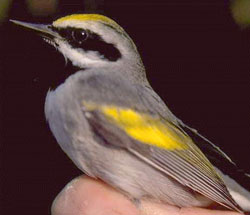
The Islander East Pipeline right-of-way will provide habitat for shrubland birds.
- Utility
right-of-way vegetation is often managed to create a cover of shrubs
that shrubland habitat bird species find irresistible. The vegetation
along the Islander East route is diverse, with rock outcrops, flatlands
with fertile soils, and wetlands. All are capable of supporting an
abundance of shrubland species of birds.
- In
one study, credited below, 92 different species of birds were
identified that use managed utility rights-of-way for foraging, most of
which who also appeared to have nesting territories in the
rights-of-way. The same study indicated that shrubland birds are much
more abundant in the northeastern region rights-of-way, due to the
right-of-way management missions of utility companies, than in the
northeast region in general, because of the decline in suitable
shrubland habitat.
Study by Confer, John. 2002. Density, Diversity and Nesting
Success of Birds on Managed Shrublands of Northeastern United States:
The Importance of Utility Rights-of-Way. Ithaca College, Ithaca, New
York.
- In the
eastern United States, species of shrubland birds are declining as
abandoned farmland passes through a shrubland stage and succeeds into
second growth forests. The decline of farms and natural grasslands have
caused a variety of citizen groups to request the Connecticut
legislature to create a Grassland Reserves Program that will match the
Farmland Preservation Program, and assist private land owners in
creating shrubland habitat.
- As
forest regeneration continues throughout the northeastern United
States, managed habitat will become increasingly significant for
shrubland bird species. The Islander East Pipeline right-of-way will
provide a new, significant habitat for shrubland bird species to nest
and forage.
Click on the underlined text to visit
http://www.ct-botanical-society.org/newsletter/grasslands.html and read about grassland habitats.
- Some
of the shrubland birds that may be observed on maintained rights-of-way
in the northeast include the Golden Winged Warbler, the Blue Winged
Warbler, the Eastern Towhee, the Common Yellowthroat, the Yellow
Warbler, and the Black Capped Chickadee. Click on the links below to
get to the web page that provides reliable scientific information
regarding the different birds including photographs, identification
tips, life histories, even examples of the bird’s songs.
-
Golden Winged Warbler
Blue Winged Warbler
Eastern Towhee
Common Yellowthroat
Yellow Warbler
Black Capped Chickadee
|