Search My Journal

|
|
Search My Journal
|
|
Travel and Adventure On the Trail of Emigrants |
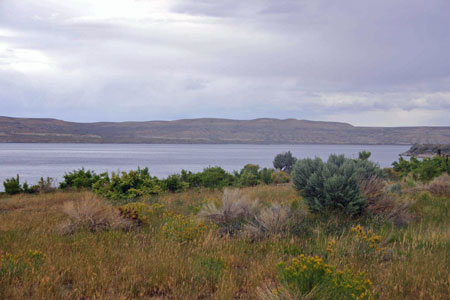
Beaver hats were considered high fashion in Europe during the early to middle 19th century. Demand for beaver pelts far exceeded supply on the continent. Jacob Astor, who owned the Astor Fur Company sent his trappers to the Green River region of Wyoming in the early 1800's. Called Astorites, they scouted the upper Green River and discovered the richest lode of beaver in the entire world. Mountain men soon followed the Astorites. They further explored the Green River while trapping beavers and earning their fortunes. James Bridger, a famous frontiersman, often plied these waters. In 1844 he carved his name in a sandstone cliff along the Green River at a popular crossing. Emigrants followed the paths blazed by the Astorites and mountain men when they traveled west to Utah and the California and Oregon territories. Many of the emigrants also carved their names in the sandstone cliffs. Today over 2,000 names adorn the cliff which is known as Names Hill.
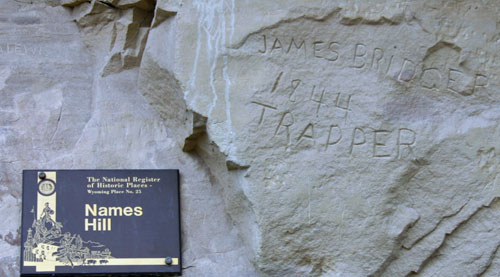
James Bridger, Trapper, was here in 1844 |
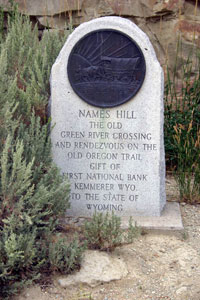
Emigrants crossed the Green River at Names Hill |
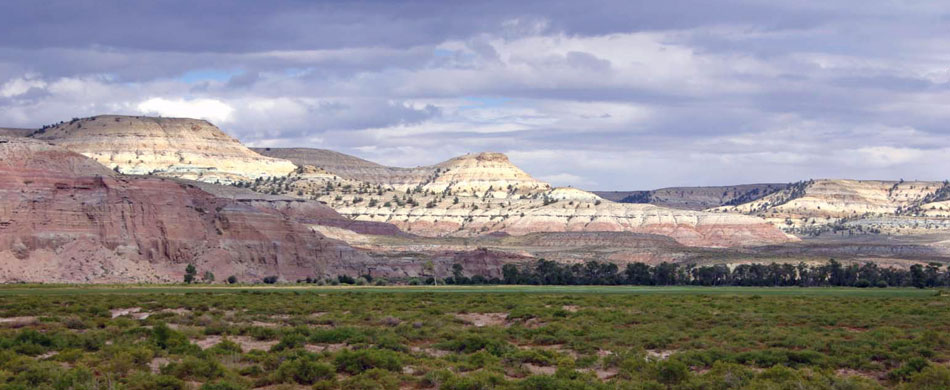
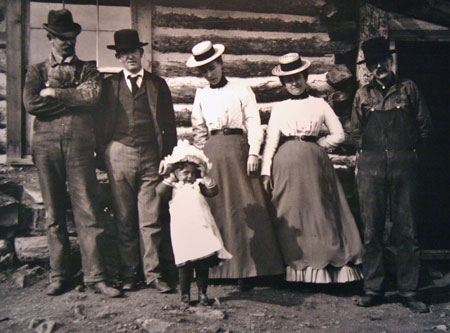
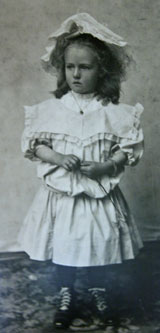
Alittle further down the road I came to South Pass City. It was named after South Pass; a nearby, easy to follow trail over the Continental Divide that was used by over half a million emigrants going west in covered wagons. The first large emigration was in 1843. Over 1,000 brave pioneers trekked nearly 2,000 miles to seek a better life in the American west. The wagon trains continued every year until the transcontinental railroad was completed in May of 1869. Then emigrants gradually chose the relative comfort and safety of the train over the arduous covered wagon and travel by foot. The last recorded, westward bound covered wagon, crossed South Pass in 1912.
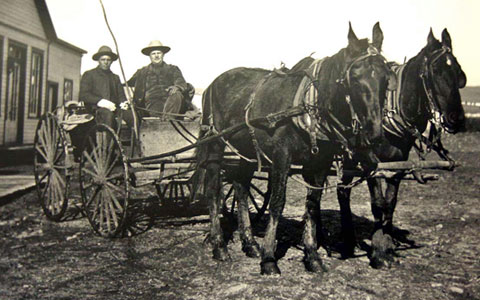
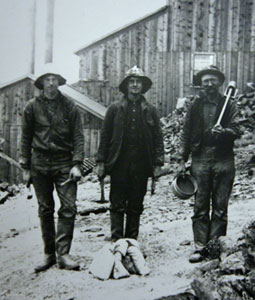
Gold was discovered at Sutters Mill in the California Territory in 1848. Subsequent gold and silver discoveries in what is now Colorado, Nevada, Idaho and Montana lured tens of thousands more emigrants westward. In 1867 the Carissa Mine in South Pass City started to produce gold. An economic boom soon followed as people flocked to the area. The population of South Pass grew to 2,000 and a bustling downtown area, almost 1/2 mile long, rapidly developed. A general store, butcher shop, several hotels, saloons, clothing and sporting goods stores, a jewelry store, a furrier, a blacksmith, livery stables, a bordello and a gun shop soon sprouted in the bustling frontier town. Doctors, lawyers, farmers and ranchers soon followed the prospectors and miners.
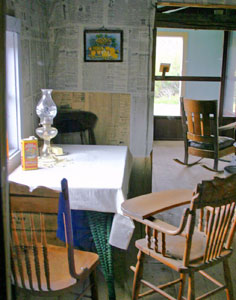
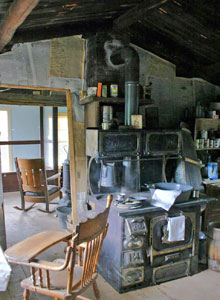
Barney Tibbals was the manager of the Carissa gold mine and lived in the log cabin pictured to the left. Newspapers served as wallpaper. A large cast iron stove provided heat for the bitter cold winters and was used to cook food upon. Manufactured chairs sat in the front room and around the simple kitchen table. A wooden planked floor was dryer and cleaner than the more common dirt floors. A kerosene lantern and candles lit the night. As manager, Barney Tibbals lived comfortably; many emigrants made do with much less.
We have come so far as a nation in the last century, that anyone living like Barney Tibbals did, would now be considered impoverished and entitled to government assistance.
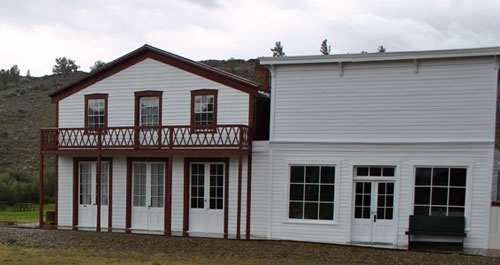
South Pass Hotel and Ice House |
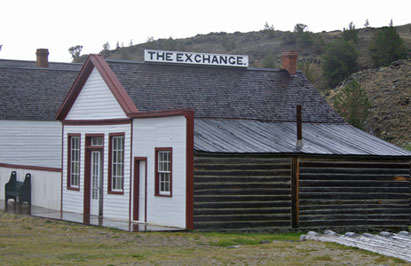
Exchange Saloon and Card Room |
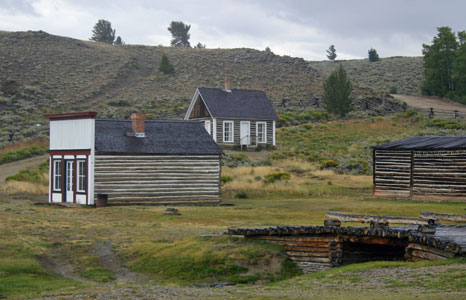
Life was often short and always hard for the emigrants and pioneers of the American West. Churches were few, saloons were plentiful and accidents or death was common. In the Exchange Saloon pictured to your right, miners and townsfolk passed away the long nights and winters by drinking and playing cards.
The buildings I toured on a rainy and cold day were restored by the State of Wyoming over the last 25 years. Several are original, and look as splendid, as they did in 1898. I saw how people lived, worked and played in a time that no longer seems distant. The restored town has a working and fully stocked, General Store and Post Office. It also has a museum that nicely explained how gold was found by prospectors, then sold to the mine owners and finally milled to remove the the surrounding rock. If the weather cooperated I would have lingered in the town for a while longer.
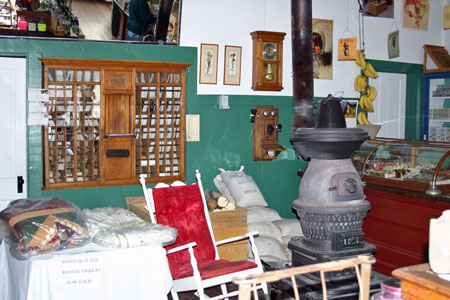
A pot belly stove warms the General Store and Post Office |
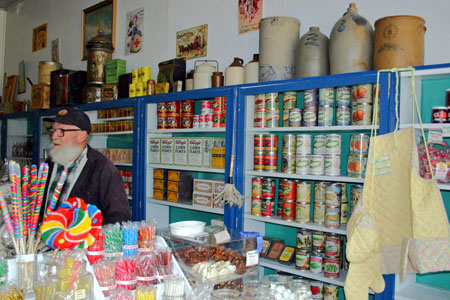
Well stocked with original products from 1890 and a few current ones |
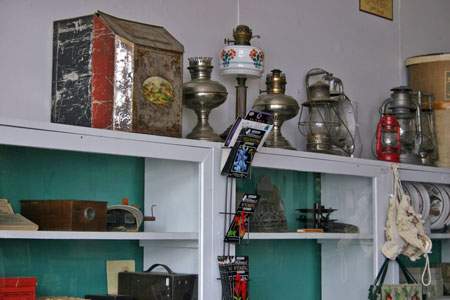
Kerosene lamps, a stereoscope viewer and more |
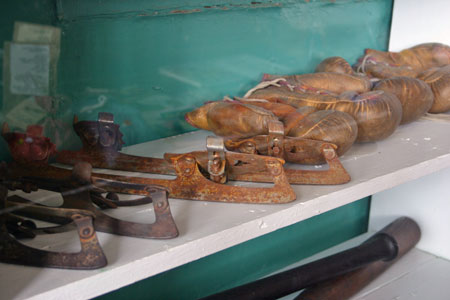
Ice skates, boxing gloves and baseball bats |
Click on the "Bookmark and Share" button to:

What do you think of this page? How can it be improved? Do you have questions about its content? Share your thoughts with Tim and other readers by clicking on "Leave a message". I read every message and will respond if you have a question.

Page 4 Ferreting for Fossils |

Tim's Life Main Table of Contents |

Travel Section Table of Contents |

Page 6 Wandering Through The Wind River Canyon |
 Certified by:


|